A card that stops working in a country where several everyday transactions are cash-only is a specific kind of problem, and it usually originates several thousand miles away. Understanding whose decision it is, and what is actually knowable about it, is more useful than the advice that normally accompanies the subject.
Whose decision it is
Turkish payment infrastructure is modern and the networks are reliable. When a foreign card fails in a Turkish shop, the refusal has generally travelled from the issuing bank rather than originated at the terminal.
Common causes include insufficient funds, hitting a daily withdrawal limit, an issuer's fraud detection responding to an unusual location, an incorrect PIN, network problems, or the card not being enabled for international use.
Five of those six are decisions or settings at your own bank. That's the useful frame: the merchant can't fix it, the terminal isn't the problem, and the party who can resolve it is asleep in a different time zone.
What isn't publishable about it
Beyond that list, the specifics are genuinely not available. What triggers a fraud hold is issuer-specific risk modelling, and no Turkish source publishes anything about it — reasonably, since the rules belong to banks in another country and are deliberately not disclosed.
Whether advance travel notice still matters is equally issuer-dependent. Some banks have retired the travel-notice function on the basis that their models now use other signals; others still offer it. There's no universal requirement and no general answer, which makes any confident statement about it wrong for a substantial share of readers.
So the honest position is narrow: your own issuer's current policy is the only authority on both questions, and it's readable today in your account settings.
Why it lands harder in Turkey than elsewhere
This is the part worth understanding, because it's structural rather than about cards.
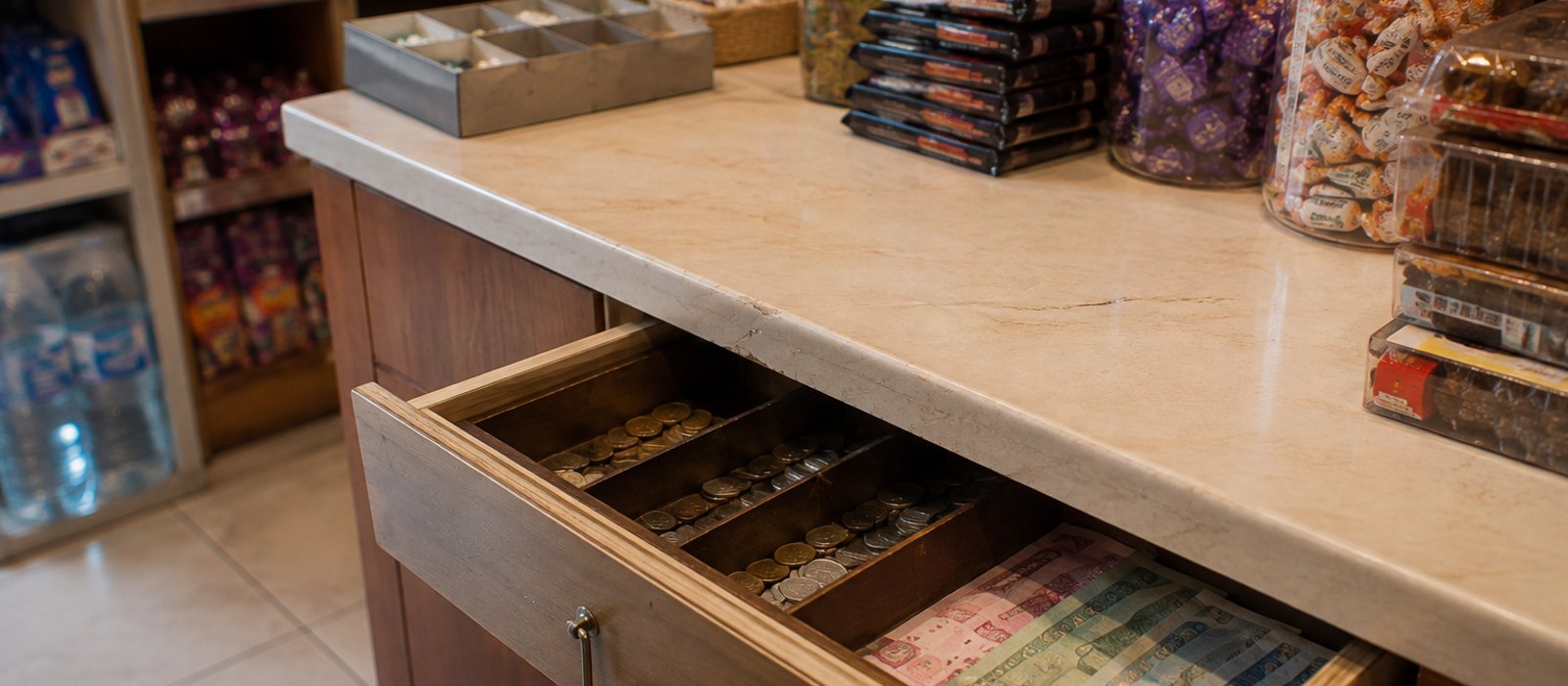
In a country where card acceptance is near-universal, a frozen card is an inconvenience — you use another payment method in the same shop. In Turkey it interacts with a specific pattern: cash is required at small family-run restaurants, street food stalls, bazaar stalls, taxis not using an app, public toilets and for tips.
Those are exactly the settings where a card was never the fallback. And the way to obtain cash without a working card is limited, which connects the two subjects — the withdrawal charges only matter if the withdrawal happens at all.
A card problem in Turkey is therefore not one problem. It's a payment problem and a cash-access problem arriving together, in a place where several routine transactions accept only the thing you can't get.
What is knowable in advance
Three things, all readable before departure and none of them requiring a prediction:
Your issuer's current travel-notice policy — whether the function exists and whether the bank says it matters.
Whether international use is enabled on each card you're carrying, which is a setting rather than a default.
Your issuer's contact route from abroad — a number that works internationally, and what it costs to call it.
That third one is the one people discover they don't have at the moment they need it, because a domestic toll-free number is frequently unreachable from outside the country.
Getting a card released
How a hold is lifted is issuer-specific and undocumented in any general source. What's structurally true is that it requires reaching the issuer and satisfying whatever verification it applies — which can involve a call, an app confirmation, or a message, depending on the bank.
The variable that matters is time zone. A hold applied on a Tuesday afternoon in Istanbul falls in the American small hours, and the gap between the problem appearing and the issuer being reachable is real.
How much cash exposure a trip carries, and what a card interruption would actually cost in a specific itinerary, is the calculation these guides can supply the components for but not perform. Turkey, Worked Out performs it.
FAQ
Why did my card stop working in Turkey?
Insufficient funds, a daily limit, issuer fraud detection reacting to the location, a wrong PIN, network problems, or international use not being enabled. Most of those are decisions at your own bank, not in Turkey.
Do I still need to tell my bank I'm travelling?
It depends entirely on the issuer. Some have retired travel notices; others still use them. There's no universal requirement, so your own bank's current policy is the only reliable answer.
What triggers a fraud hold?
Issuer-specific risk modelling that banks deliberately don't publish. No general list exists, and anything presented as one is guesswork.
Why is this worse in Turkey than elsewhere?
Because small restaurants, street food, bazaar stalls, non-app taxis and tips are cash-only — settings where a card was never the fallback — and the way to get cash also runs through a card.
How fast can a hold be lifted?
It requires reaching the issuer and passing its verification, which varies by bank. The practical constraint is the time zone: a hold applied in the Turkish afternoon lands in the American small hours.