The purchases that create problems in Turkey are rarely the expensive ones. A serious rug buyer asks questions. The person who ends up in a difficult conversation at departure is usually holding something small, cheap, and picked up almost thoughtlessly — a coin from a tray, a fragment from the ground, a stone from a beach.
Here is how the law treats the categories that catch people.
Coins
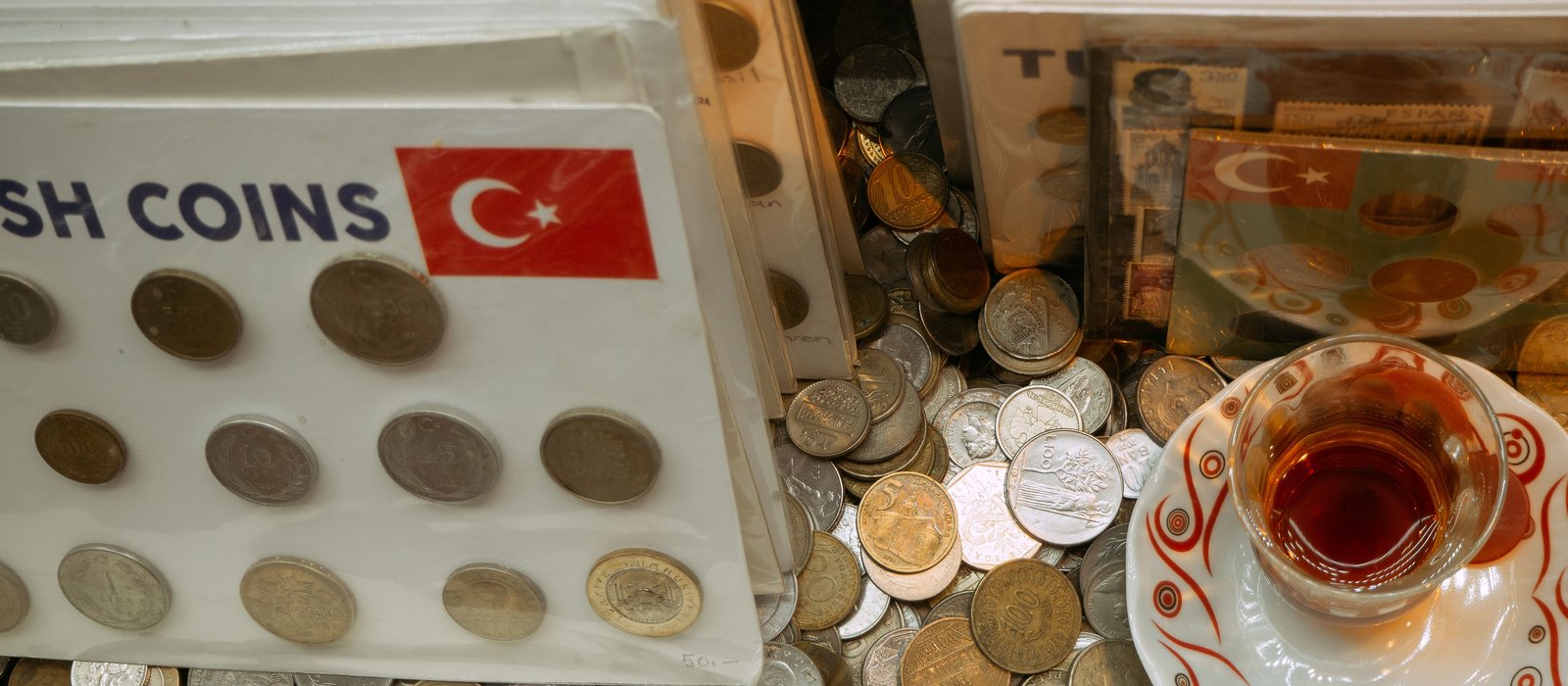
Ancient or historic coins meeting the statutory criteria are protected movable cultural property and may not be exported without authorisation; unauthorised export is an offence.
Coins are the classic case because they are sold openly, cost very little, and look like souvenirs rather than artefacts. A tray of corroded bronze in a bazaar contains, in principle, a mixture of reproductions and genuine antiquities, and nothing on the tray tells you which is which.
The price is no guide either. A genuine low-value ancient coin can cost less than a good reproduction, because the market for common coins is enormous and the market for convincing fakes is aimed at people paying more.
Fossils and stones
Fossils and natural specimens qualifying as natural property — rare, or of special scientific or geological value — are protected and subject to the same export prohibition.
This is the category most travelers don't know exists. The law protects natural property alongside cultural property, so a fossil is not in a different world from a Roman lamp. Pamukkale's travertine, in particular, is a protected natural formation, and removing material from it is not a souvenir transaction.
Ordinary beach pebbles are not what the statute is aimed at. Something distinctive enough that you photograph it before pocketing it is worth a second thought.
Found versus bought
People assume these are two ends of a spectrum, with buying being the safer end. The law treats them as different situations entirely, and the found case is the harsher of the two.
Any cultural or natural property found on land or underwater must be reported within three days. Unreported removal from an archaeological site constitutes an offence, and the object is State property.
Three days to report, and the object belonged to the State from the moment it was found. There is no acquisition step in that sequence — you never owned it, so there is nothing to declare and nothing to export.
Buying at least produces a receipt and a transaction, which establishes ownership and price even though, as covered in what a seller's certificate actually proves, it doesn't authorise anything. A fragment lifted at Ephesus produces no document at all.
Religious objects
Icons and religious objects meeting the historic-period and cultural-value criteria are protected cultural property and subject to the export prohibition.
The statute explicitly reaches objects of religious value, which puts icons squarely inside the framework rather than at its edges. And religious objects have a particular quality that makes the question harder: age and devotional character are precisely what make one desirable, and precisely what the criteria are looking for.
Old is not the same as protected
This is the distinction the whole subject turns on, and it cuts both ways.
An object can be genuinely old and fall outside the statute — a nineteenth-century copper pot with no particular scientific or cultural significance is old furniture, not heritage. And an object can be less old than you'd expect and still meet the criteria, because no fixed numerical age or cut-off date is stated for movable cultural property; protection attaches to objects of prehistoric or historic periods possessing the statutory criteria.
So "how old is it" is the wrong question, asked by almost everyone. The statutory question is what the object is, which is a judgement a state museum makes.
What is genuinely clear
Objects falling outside the statutory definitions — ordinary modern commercial goods, and newly manufactured souvenirs without historic or scientific cultural value — are not subject to the cultural-property export prohibition.
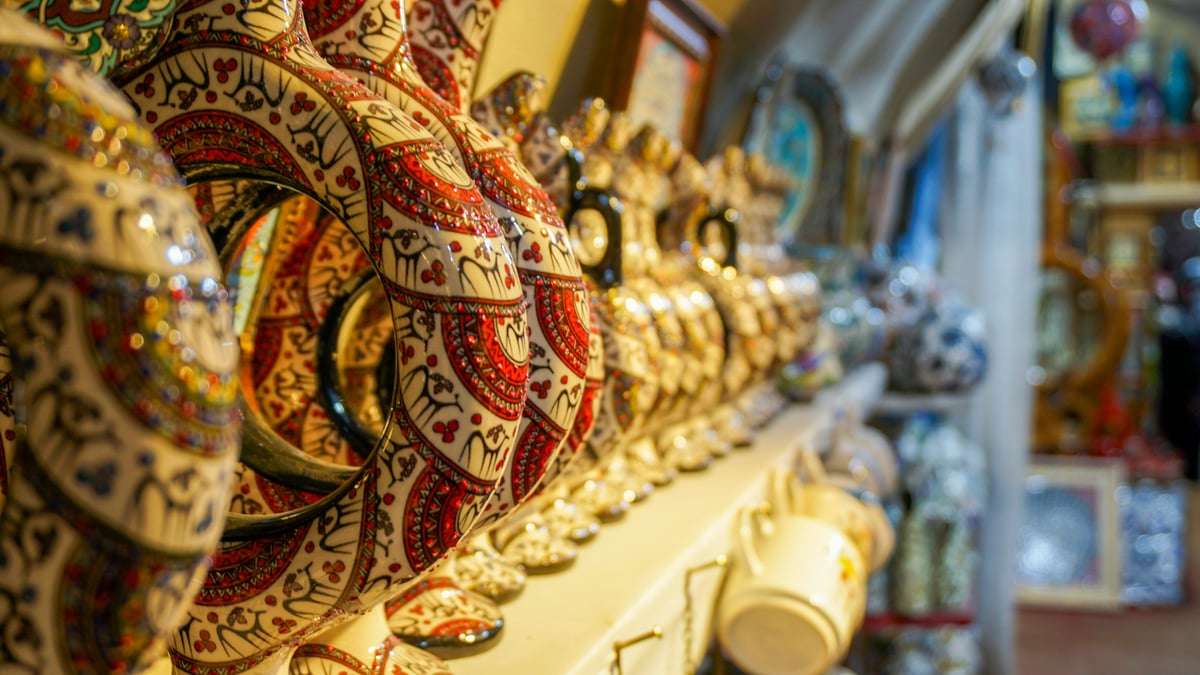
Which is nearly everything on nearly every stall. New ceramics, evil-eye glass, textiles, spices, soap, contemporary jewellery, tea: none of it engages any of this. The framework is narrow, and it is aimed at a specific category rather than at tourism.
The ambiguity lives in a small set of objects — the ones that are old, or found, or purport to be either.
Judging which side of that line a particular object sits on, without a museum to ask and a seller with the opposite incentive, is exactly the reasoning these guides supply the parts for. Turkey, Worked Out performs it.
FAQ
Can I buy an old coin in a bazaar?
Ancient or historic coins meeting the statutory criteria are protected and can't be exported without authorisation. Nothing on a tray distinguishes genuine from reproduction, and price doesn't either.
Is taking a stone or fossil a problem?
It can be. Fossils and natural specimens that are rare or of special scientific value are protected as natural property, under the same export prohibition. Pamukkale's travertine is a protected formation.
What if I just picked it up rather than bought it?
That's the harsher case. Anything found must be reported within three days, unreported removal is an offence, and the object is State property — you never owned it.
Are icons restricted?
Icons and religious objects meeting the criteria are protected cultural property subject to the export prohibition — the statute reaches objects of religious value explicitly.
So what's safe to buy?
Newly manufactured goods without historic or scientific cultural value fall outside the prohibition — which is nearly everything on a normal stall. The question only arises for objects that are old, found, or claimed to be.