Turkish export law is only half the journey. The other half is what US customs does when you land, and it has its own restrictions, its own paperwork, and one rule aimed specifically at Turkey that almost no traveler knows exists.
Here's the American side of the same purchase.
The personal exemption
Returning US residents may bring back goods acquired abroad for personal or household use up to an aggregate fair retail value of $800 duty-free, provided the goods accompany the traveller, the stay abroad was at least 48 hours, and the exemption hasn't been used within the preceding 30 days.
Four conditions, and each one does work. The value is aggregate, not per item. The goods must travel with you — anything shipped separately sits outside the exemption. The 48-hour minimum rules out short trips. And the 30-day rule catches frequent travelers.
Above $800, ordinary duty applies. That is a cost, not a prohibition.
Declaration is not optional
All articles acquired abroad must be declared. Failure to declare items that should be declared risks forfeiture, and the exemption applies only to declared accompanying goods that meet the statutory conditions.
Note the second half. The exemption isn't a threshold below which nothing needs saying — it's a relief that applies to goods you have declared. Undeclared goods don't qualify for it, which inverts the intuition that staying under $800 means staying quiet.
The rule aimed at Turkey
This is the one worth knowing about, because it's specific and it's current.
The United States maintains import restrictions on designated categories of archaeological material — approximately 1.2 million BC to AD 1770 — and ethnological material from the 1st century AD to 1923, from Türkiye, under a bilateral memorandum implementing the 1970 UNESCO Convention. The restrictions were extended through 24 March 2031.
Two things stand out. The ethnological window runs to 1923, which is far more recent than "antiquity" suggests and reaches ordinary-looking Ottoman-era objects. And this is a US restriction operating independently of Turkish law — an object can clear Turkish departure and still meet a restricted description on arrival.
The two systems aren't mirrors of each other. Clearing one says nothing about the other.
Everyday purchases
Most commercially packaged food products and textiles for personal use are admissible subject to ordinary agricultural and textile rules; certain meats, plants and soil are prohibited or restricted, and textiles may face quota or labelling requirements in commercial quantities.
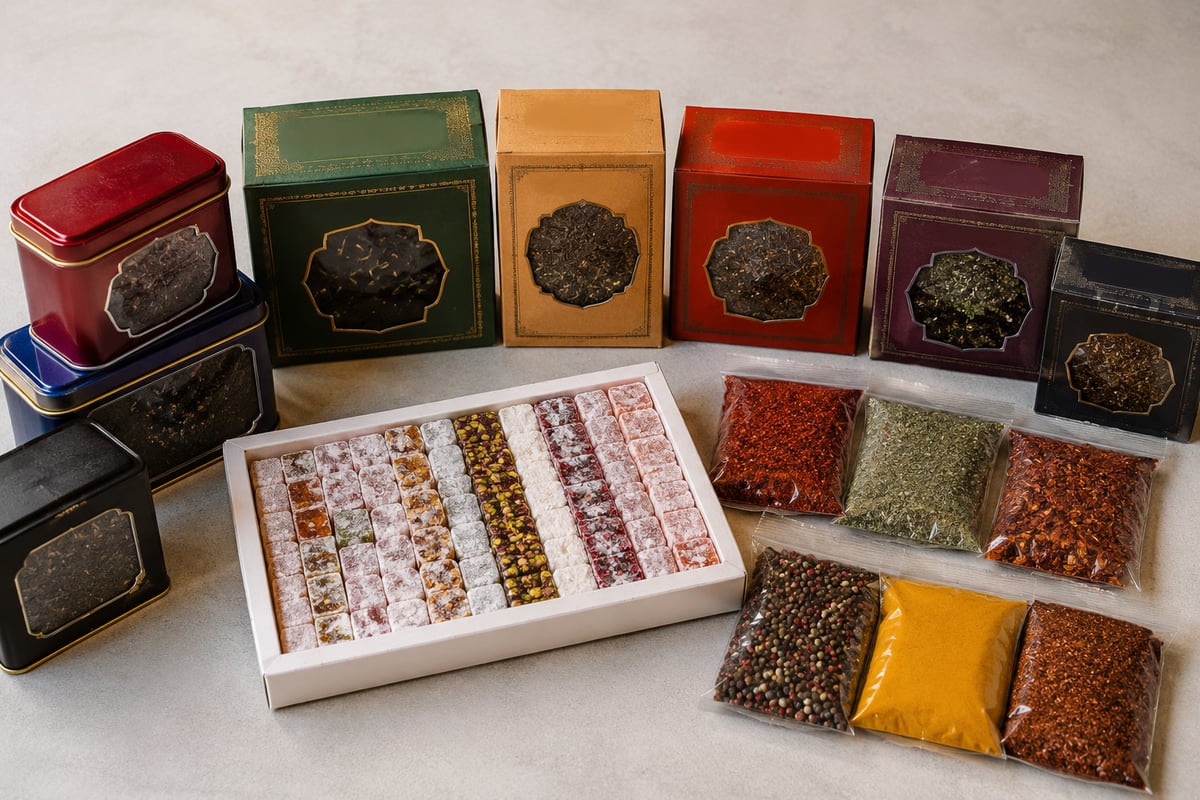
For the things people actually carry home from Turkey — sealed Turkish delight, packaged tea and spices, soap, ceramics, textiles — this is unremarkable. The agricultural restrictions bite on fresh produce, meat, seeds and anything with soil attached, which is a different shopping list.
Sealed and commercially packaged is the pattern that travels. Loose, fresh, or agricultural is the pattern that doesn't.
Documentation for something expensive
For high-value personal imports, customs expects a sales receipt or invoice showing description, purchase price and date, and, where cultural-property restrictions may apply, proof that the object is not on the designated list or was lawfully exported from Türkiye.
The second half of that only engages for objects near the restricted categories. But it's worth reading carefully: the proof contemplated is either that the object falls outside the list, or that it left Turkey lawfully — which loops directly back to the Turkish determination discussed in what Turkish law protects.
For an ordinary purchase, the receipt is the whole of it. For an object with age, the two jurisdictions start asking each other's questions.
How the two systems sit together
Worth being explicit, because travelers routinely assume one clearance implies the other:
Turkey asks whether the object may leave, on criteria assessed by a state museum.
The United States asks whether the object may enter, against a designated list defined by date ranges and material type.
Neither defers to the other, and the date ranges in the US list don't correspond to anything in Turkish law, which sets no age threshold at all.
An object can be unremarkable under one and described by the other. That's not a contradiction — they're answering different questions on different criteria.
Holding both systems in view at the moment of purchase, rather than discovering the second one at a baggage hall, is exactly what these guides can supply the parts for but not do. Turkey, Worked Out does it.
FAQ
How much can I bring back duty-free?
An aggregate $800 of accompanying goods, if you were abroad at least 48 hours and haven't used the exemption within 30 days. Shipped goods don't accompany you.
Do I have to declare things under $800?
Yes. All articles acquired abroad must be declared, and the exemption applies only to declared goods — staying under the figure isn't a reason to stay quiet.
Does the US restrict Turkish antiques specifically?
Yes. Import restrictions cover designated archaeological material and ethnological material from the 1st century AD to 1923, extended through 24 March 2031. The 1923 end-date reaches ordinary-looking Ottoman-era objects.
Can I bring Turkish delight and spices home?
Commercially packaged foods and textiles for personal use are generally admissible; meats, plants and soil are restricted or prohibited. Sealed and packaged travels; fresh and agricultural doesn't.
If Turkey let it out, will the US let it in?
Not necessarily. The two systems ask different questions on different criteria and neither defers to the other — the US list is defined by date ranges, while Turkish law sets no age threshold at all.