Turkey's southern and western coasts are lined with some of the Mediterranean's most beautiful beaches — turquoise coves backed by pine mountains, long golden sweeps of sand, and sheltered lagoons. For American travelers used to Caribbean or Pacific shores, the combination of warm clear water, ancient ruins nearby, and remarkable value is hard to beat. Here are the best beaches and where to find them.
Ölüdeniz Blue Lagoon — the icon
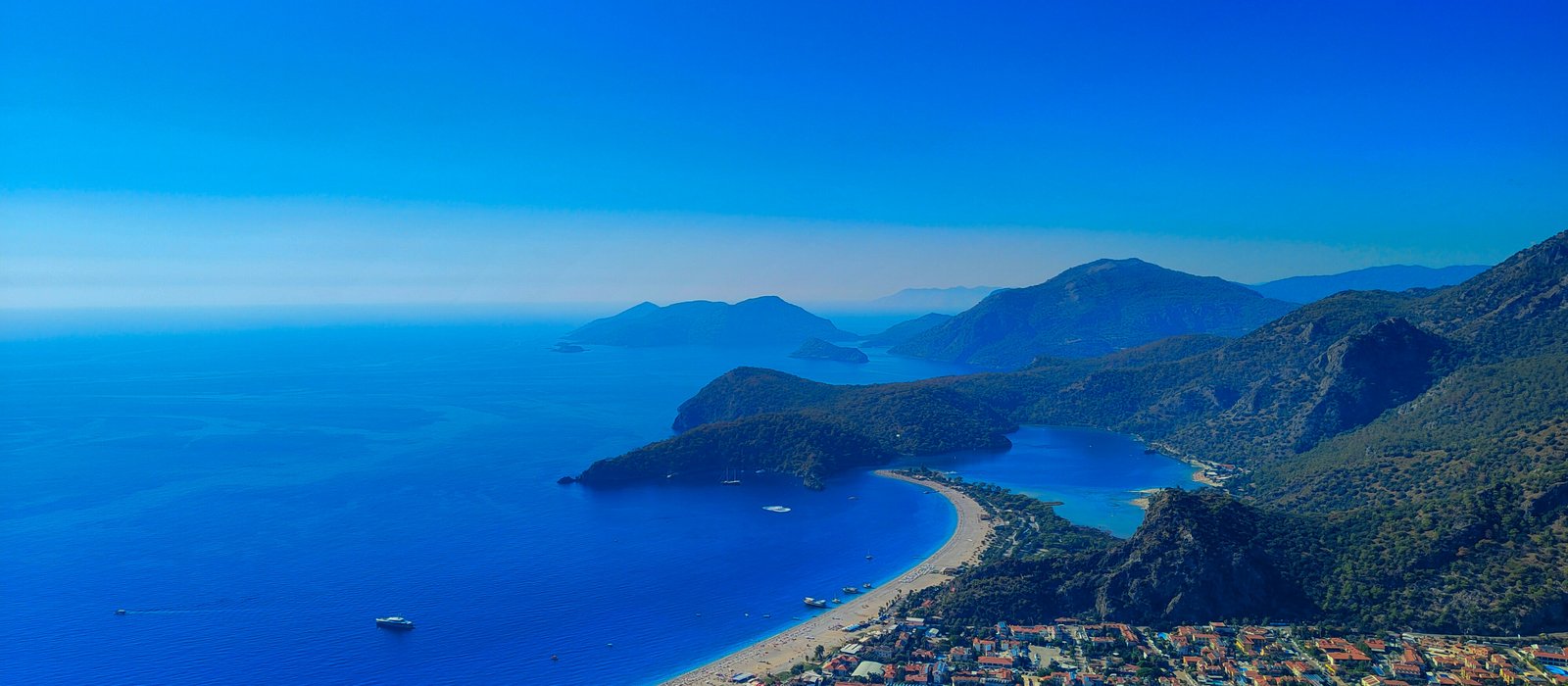
The most famous beach in Turkey, the Ölüdeniz Blue Lagoon is a sheltered, impossibly turquoise inlet inside a protected nature park near Fethiye on the Mediterranean coast. Calm and swimmable, it's also the landing zone for tandem paragliders descending from Babadağ mountain above. The adjoining Belcekız Beach is the lively main strand. It's busy in peak season for good reason. See our Fethiye & Ölüdeniz guide.
Patara — endless sand and ruins
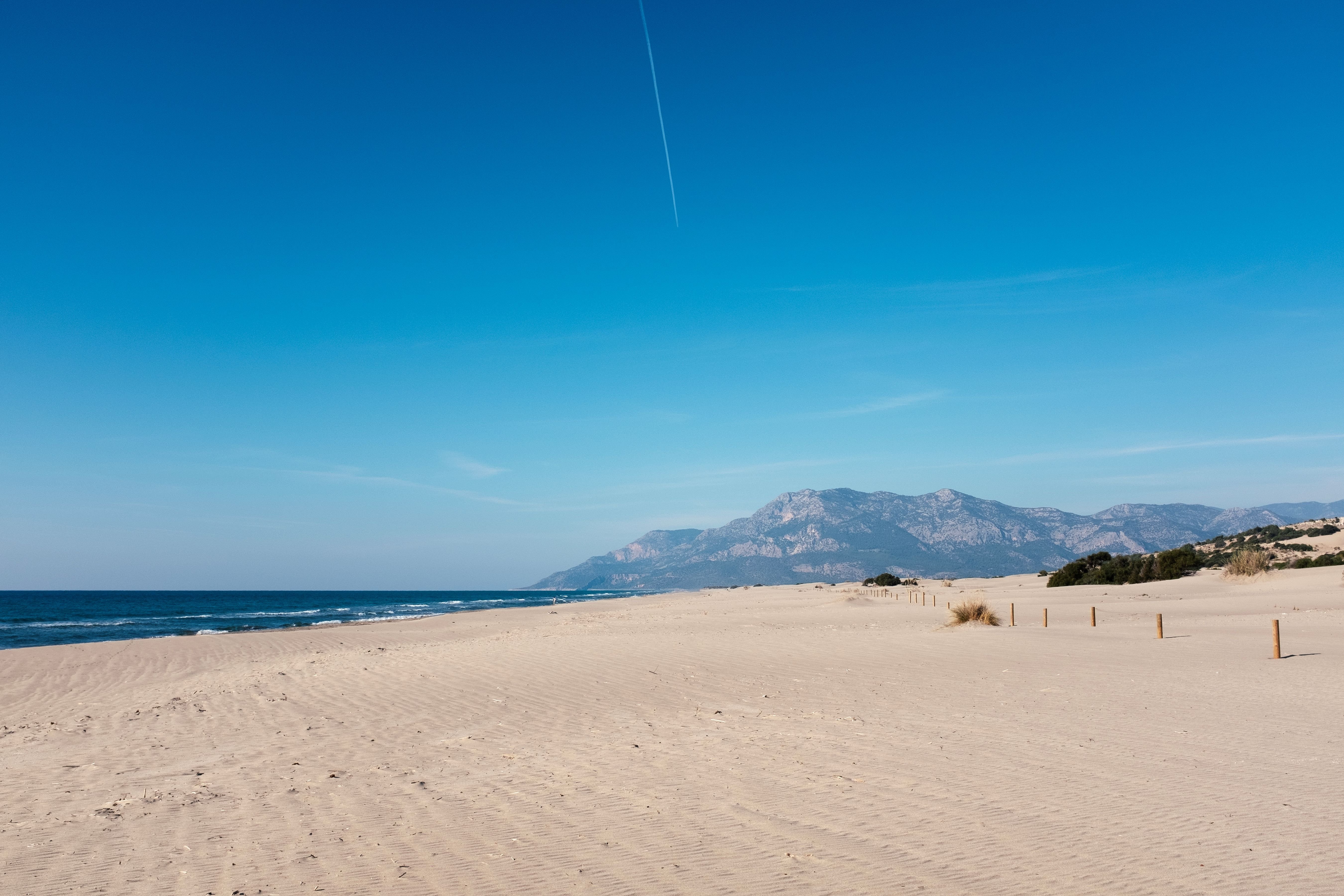
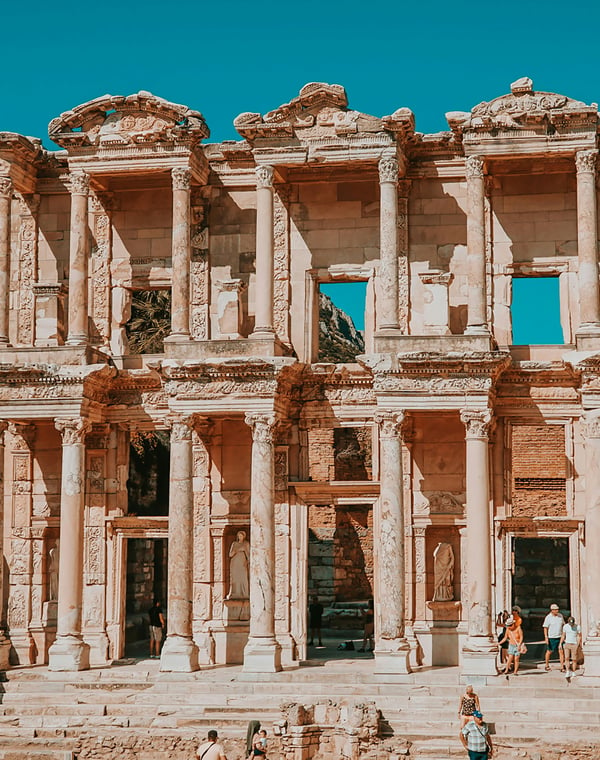
For a complete contrast, Patara is one of the longest beaches in the Mediterranean — miles of broad, undeveloped golden sand backed by dunes and the ruins of an ancient Lycian city. Because it's a protected sea-turtle nesting site, building is restricted, so it stays wild and uncrowded even in summer. You walk through the ancient ruins to reach the sand: history and beach in one.
The Mediterranean coves and resort beaches
Along the Turquoise Coast, the choice ranges from buzzy resort sand to hidden coves:
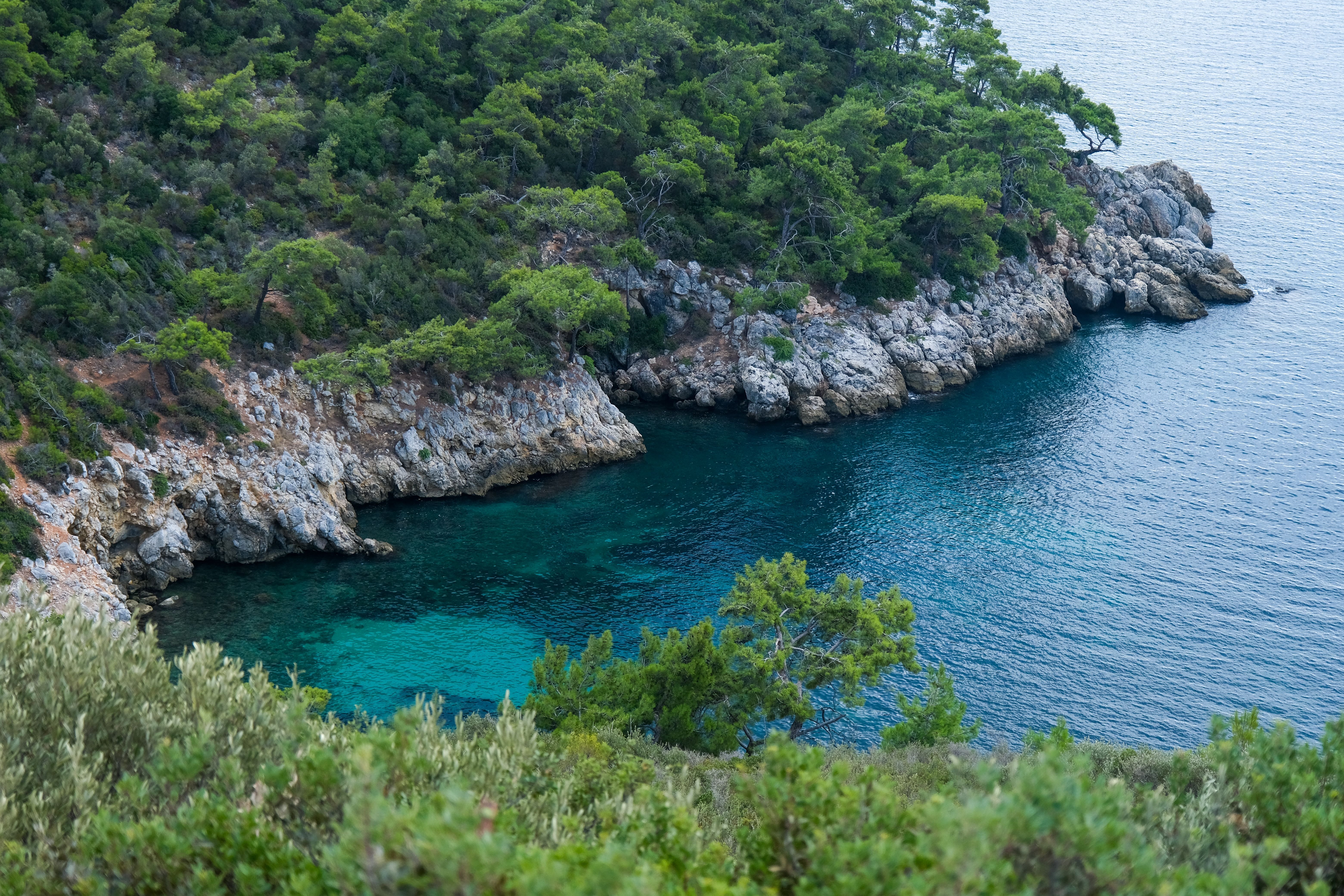
Small Lycian coves and Olympos/Çıralı — hidden turquoise inlets along the Lycian coast, several reached by short trails or boat, with the ruins-and-beach combination at Olympos a standout.
Konyaaltı and Lara (Antalya) — the city's two main beaches: pebbly Konyaaltı with mountain views, and sandy Lara lined with big resorts.
The Belek, Side & Kemer belt — the all-inclusive resort beaches, ideal for a settle-in-one-place holiday.
The Aegean coast around Bodrum offers a different vibe — chic beach clubs, whitewashed towns, and breezier water that's popular with windsurfers. The beaches here are often smaller and rockier than the Mediterranean's, but the scene, the nightlife, and the boat trips to nearby coves make up for it.
Beaches with something extra
What sets Turkish beaches apart for many American visitors is how often they come paired with something more than sand. At Patara you walk through a ruined Lycian city to reach the dunes. At Ölüdeniz, paragliders spiral down onto the beach from a mountain nearly 2,000 meters above. Near Olympos and Çıralı on the Mediterranean, a beach day can include the ancient ruins in the pines and the eternal natural flames of the Chimaera burning on the hillside above. And almost everywhere along the south coast, a short boat trip opens up coves reachable only by water. The beach is rarely just a beach here, which is a big part of the appeal.
When to go and what to know
Beach season runs roughly May to October, with the warmest sea in mid-to-late summer; July and August are hottest and busiest, while late spring and early fall offer warm water with fewer crowds. The water across the south coast is famously clear. Many beaches have sunbed-and-umbrella setups (often via a beach club or for a small fee), and the protected sites like Patara and Ölüdeniz have rules to follow. Thanks to the weak lira, a Turkish beach holiday is excellent value for Americans — check current rates and book the best-placed coastal hotels early for summer.
Beach practicalities for Americans
A few things differ from a typical US beach day. Many Turkish beaches operate on a beach-club model: you rent a sunbed and umbrella for the day (sometimes free if you order food and drinks), and the club provides showers, loungers, and service. Public stretches exist too, especially at protected sites. Topless sunbathing is common at resort beaches on the south and Aegean coasts but not at more local or conservative spots, so take your cue from those around you. Bring water shoes for pebbly beaches like Konyaaltı, and remember the protected nesting beaches (Patara, Ölüdeniz's park) have rules and sometimes seasonal access limits to safeguard sea turtles. None of this is complicated — just slightly different from what you might expect.
FAQ
What is the most famous beach in Turkey?
The Ölüdeniz Blue Lagoon near Fethiye — a sheltered turquoise inlet in a protected park, also famous for paragliding landings.
Where are the best uncrowded beaches?
Patara, a long protected stretch of wild sand backed by Lycian ruins, stays uncrowded even in summer thanks to building restrictions.
When is beach season in Turkey?
Roughly May to October, with the warmest sea in mid-to-late summer. Late spring and early fall offer warm water with fewer crowds.
Are Turkey's beaches good value?
Yes — thanks to the weak lira, beach holidays and coastal hotels are excellent value for American travelers compared with much of the Mediterranean.
Keep planning
Not sure how it all fits together?
Pick your trip length and we'll point you to the right day-by-day itinerary.