Shopping in Turkey is a sensory experience in itself — labyrinthine covered bazaars, the smell of spices, walls of glowing lamps, and the ritual of tea and haggling. It's also a place where unprepared tourists overpay or get steered into commissions. Here's what's genuinely worth buying, how the bazaars work, and how to shop smart.
What to buy
Turkey produces a wealth of distinctive, high-quality goods. The standouts:
Turkish carpets and kilims — the iconic purchase, hand-knotted wool or silk rugs in regional patterns (see our dedicated guide to buying a Turkish rug).
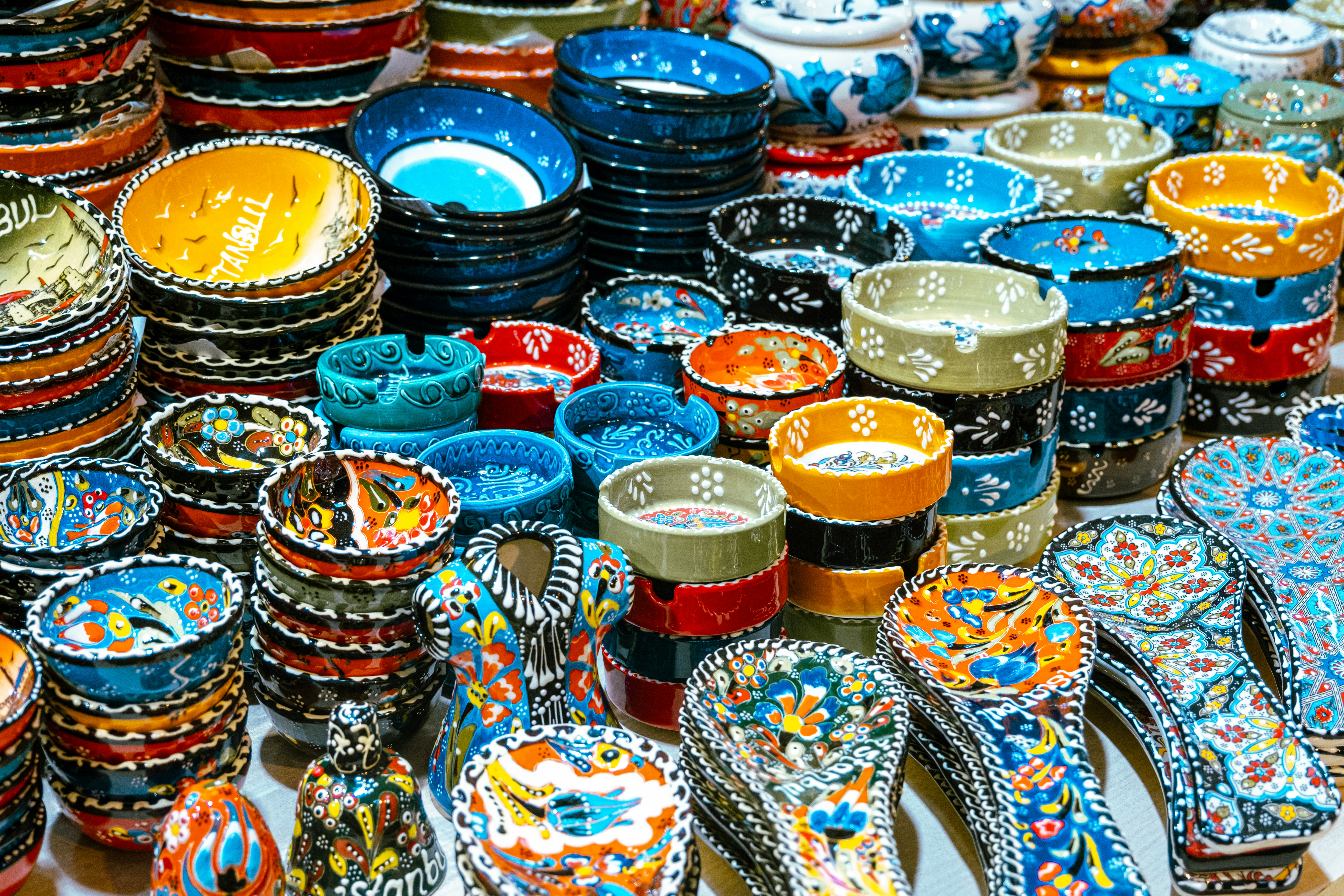
Ceramics and tiles — hand-painted Iznik-style bowls, plates, and tiles in cobalt and turquoise.
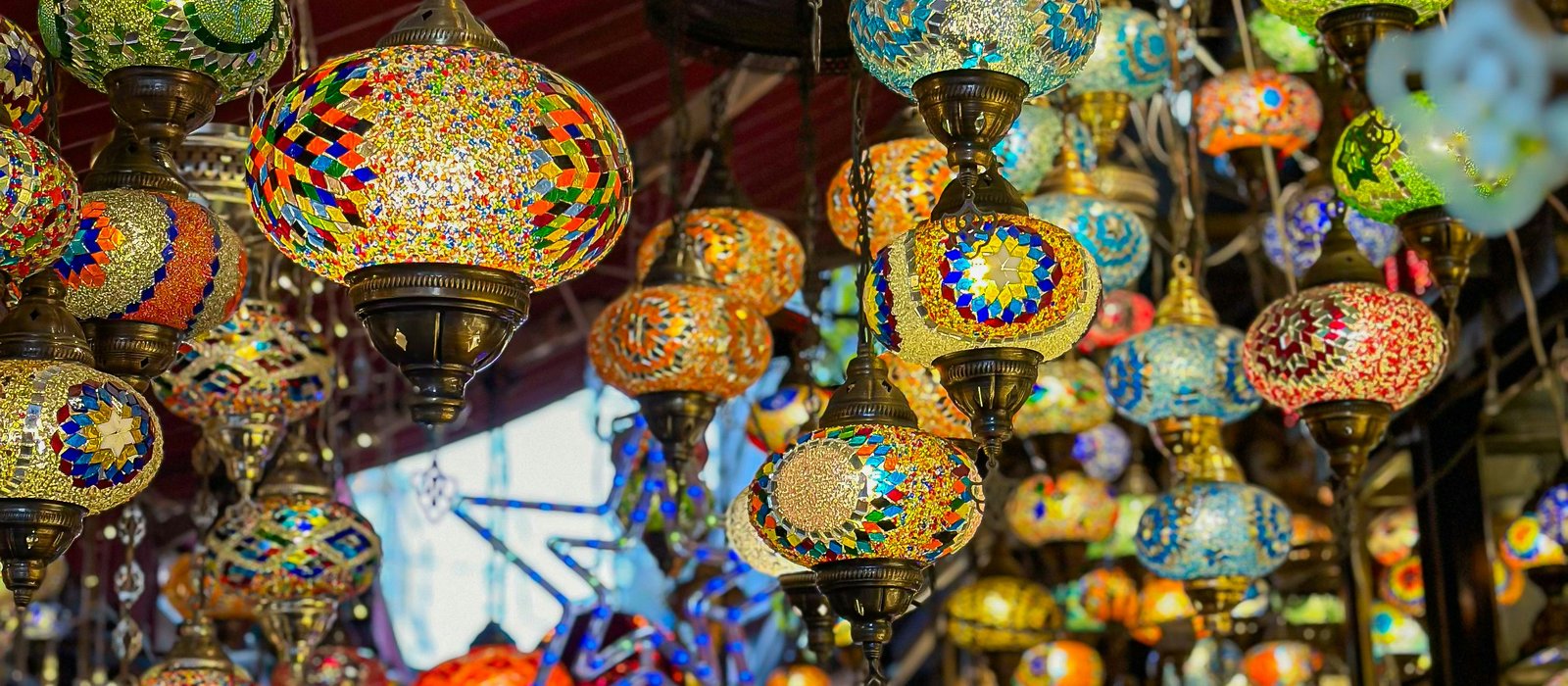
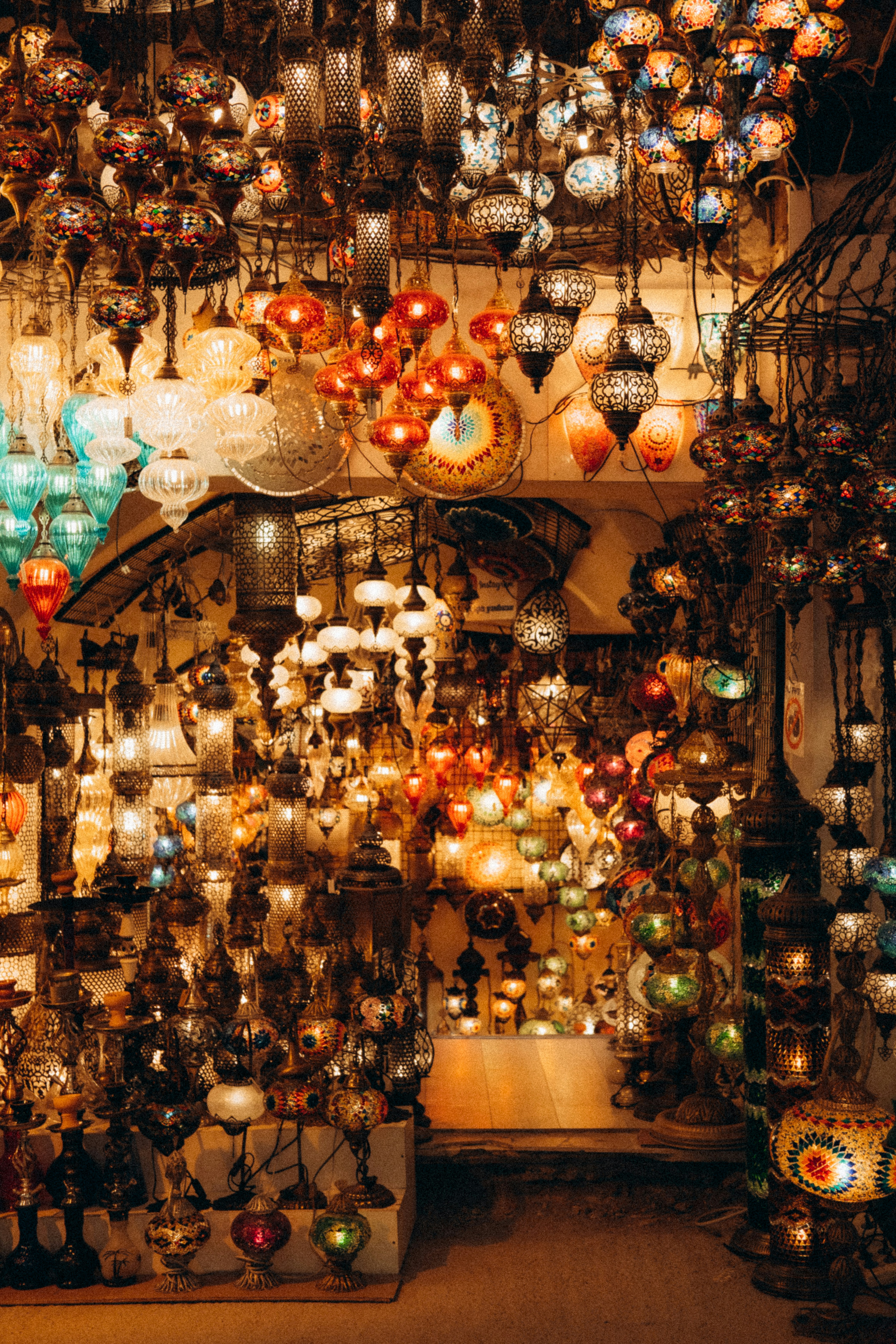
Turkish lamps and lanterns — the mosaic glass lamps that light up every bazaar.
Textiles — peştemal towels, scarves, and pashminas.
Food — Turkish delight (lokum), baklava, spices, teas, and the prized pistachios of Gaziantep.
Istanbul's Grand Bazaar — 4,000 shops under one roof — is the most famous, best for carpets, jewelry, lamps, and ceramics, while the nearby Spice Bazaar is the place for Turkish delight, spices, and teas. Beyond Istanbul, nearly every city and town has its own atmospheric market, often less touristy and better priced. Wandering the bazaars is half the fun whether or not you buy.
The art of bargaining
In the bazaars and with market vendors, haggling is expected — it's a friendly ritual, not a confrontation. The basics: be warm and good-humored, don't show too much eagerness, and have a price in mind. A common approach is to counter well below the opening ask and meet somewhere in the middle. Be prepared to walk away — it's the most powerful tool, and often produces the real price. Note that fixed-price shops, supermarkets, and restaurants do not bargain; haggling is for bazaars, markets, and souvenir sellers.
Avoiding the scams
A little awareness saves money and hassle. Be wary of overly friendly strangers or "guides" who offer to show you a shop — they're often earning a commission baked into your price. Decline tea if you don't want to feel obligated (though accepting it carries no real obligation). For big-ticket items like carpets and gold, buy from established shops, get the terms in writing, and never feel pressured by a hard sell. Be cautious with shipping arrangements on expensive items; reputable dealers handle this professionally, but get everything documented.
Knowing real from fake
Quality varies enormously, and tourist areas are full of mass-produced imitations alongside genuine craft. A few signals of the real thing: hand-painted ceramics have slight irregularities and a maker's mark, while printed factory versions look perfectly uniform; genuine Turkish delight is fresh, soft, and sold by weight from a counter rather than in shrink-wrapped boxes; real leather and copperware have heft and hand-finishing. None of this means you must buy the most expensive version — a cheap printed tile makes a fine fridge magnet — but if you're paying craft prices, make sure you're getting craft. When in doubt, the rule that protects you everywhere applies: shop around, compare, and don't buy the first thing under pressure.
Practical tips
Carry some cash, as small vendors prefer it and it strengthens your bargaining hand, though larger shops take cards. Keep receipts for valuable purchases. If you're buying something significant, shop around first to learn the going range — prices for the same item vary enormously. And thanks to the weak lira, Turkey offers strong value for American shoppers across the board, from cheap souvenirs to genuinely worthwhile crafts.
Getting purchases home
For most souvenirs — spices, lamps, ceramics, textiles — you can simply pack them, though wrap fragile ceramics and lamps carefully or ask the shop to box them. For larger or valuable items like carpets, reputable dealers ship internationally; get the terms in writing and pay by card for protection. Keep receipts for anything significant, both for your records and for customs. The US generally allows personal purchases of Turkish goods without issue, but one category needs care: genuine antiques and antiquities are tightly restricted for export from Turkey, so be skeptical of anything sold as truly "ancient," and make sure any real antique comes with proper documentation. For everyday crafts and food, there is nothing to worry about — just enjoy the haul and the memories that come with each piece.
FAQ
What should I buy in Turkey?
Carpets and kilims, hand-painted ceramics, mosaic lamps, textiles, Turkish delight and spices, and evil-eye charms are the classic, high-quality buys.
Is bargaining expected in Turkey?
Yes, in bazaars, markets, and with souvenir vendors. It's a friendly ritual. Fixed-price shops, supermarkets, and restaurants don't bargain.
How do I avoid getting scammed shopping?
Be wary of strangers steering you to shops (they earn commissions), buy big items from established stores with written terms, and shop around to learn fair prices.
Where is the best shopping in Turkey?
Istanbul's Grand Bazaar for carpets, lamps, and ceramics, and the Spice Bazaar for food and spices. Smaller-city markets are often cheaper and less touristy.