Antalya is the capital of Turkey's Mediterranean coast and the gateway to the Turquoise Coast — a city that pairs a beautifully preserved Ottoman old town with long beaches, Roman ruins, and a backdrop of the Taurus Mountains. It's where many Americans start a coastal trip, and it rewards a couple of days before you head along the shore. Here's the first-timer's rundown.
How to get there
Antalya is an easy domestic flight from Istanbul — about 1h15 to Antalya Airport (AYT) — with frequent, inexpensive service on Turkish Airlines, AJet, and Pegasus. The airport is about 20–30 minutes from the center, connected by a tram line, airport bus (Havas), or taxi. Antalya is the natural arrival point for the eastern Turquoise Coast.
A quick orientation
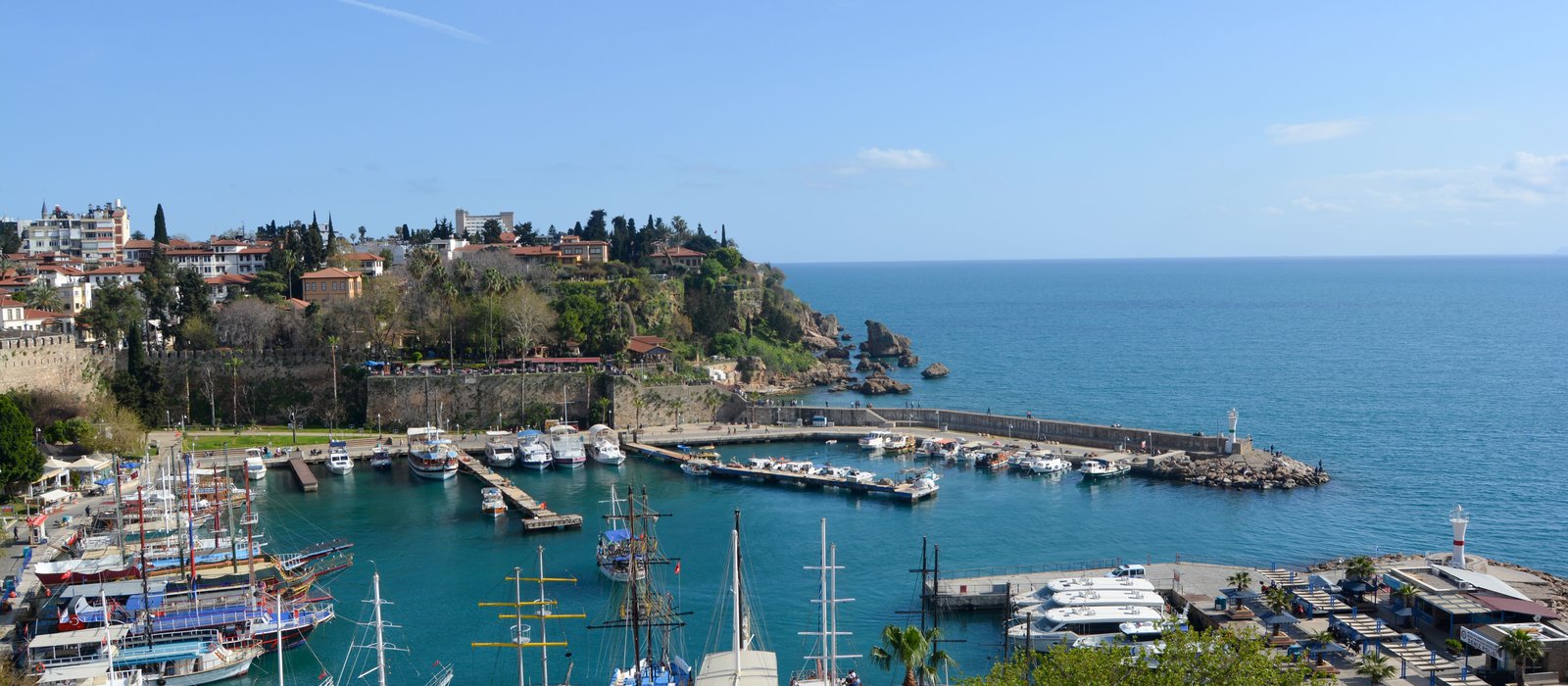
Antalya is bigger than first-timers expect — a city of over a million spread along the coast — but the part that matters for visitors is compact. Kaleiçi, the walled old town, sits on a cliff above the old Roman harbor and holds most of the charm, hotels, and restaurants you'll want. Flanking it are two beach zones: pebbly Konyaaltı to the west with mountain views, and sandy Lara to the east where the resort hotels cluster. Inland rise the Taurus Mountains, the source of the dramatic day trips and the snowmelt that feeds the city's waterfalls. Keep that simple map in mind — old town, two beaches, mountains behind — and Antalya is easy to navigate.
Things to do in Antalya
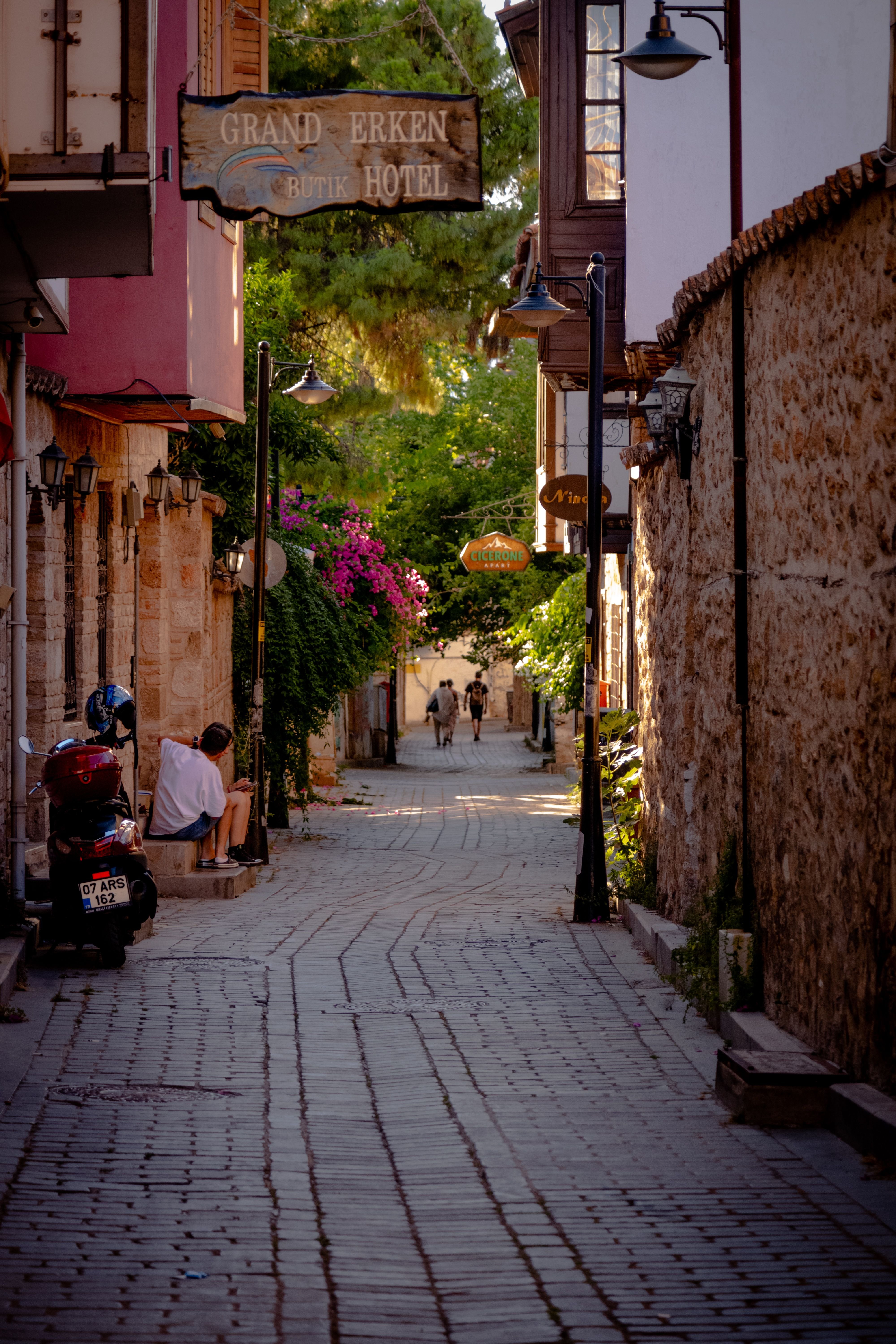
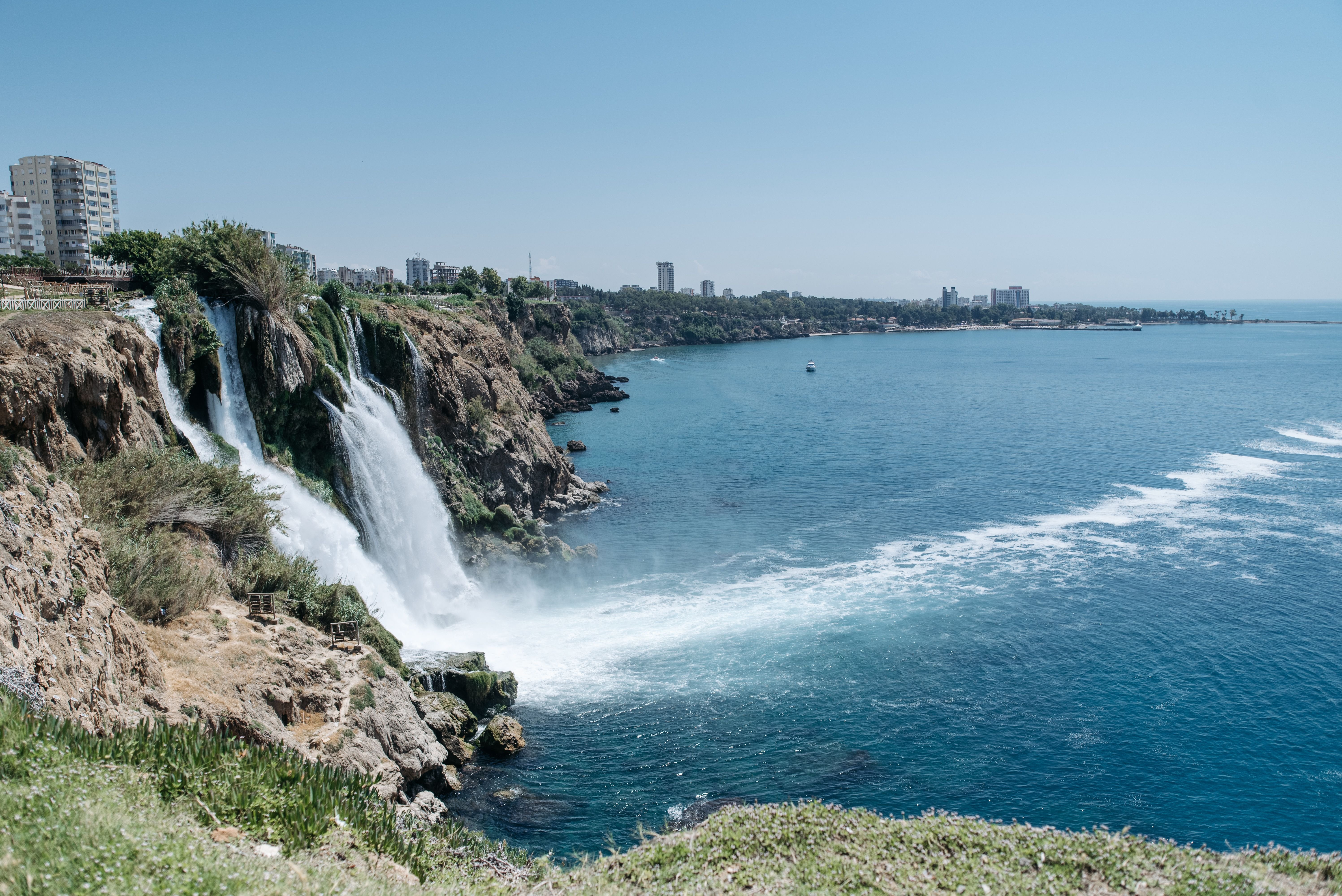
The heart of the city is Kaleiçi, the old town: a maze of cobbled lanes, restored Ottoman mansions, boutique hotels, and a picturesque restored Roman harbor. Wander through Hadrian's Gate, browse the bazaars, and stop for tea overlooking the marina. Just outside the center, the Düden Waterfalls plunge dramatically into the sea — a memorable, easy excursion. For beaches, the city is flanked by Konyaaltı (pebble, with mountain views) and Lara (sand, with the big resorts).
Day trips: ancient ruins
Antalya is surrounded by some of Turkey's finest classical sites, making it a superb base for history:
Aspendos — one of the best-preserved Roman theatres anywhere, still used for performances.
Perge — an extensive ancient city with a colonnaded street and stadium.
Side — a resort town built around seafront temple ruins.
Termessos — a dramatic ruined city high in the mountains, for the more adventurous.
Where to stay
For first-timers, base in Kaleiçi — the old town's boutique hotels put you in the most atmospheric part of the city, walkable to the harbor and bazaars. For a beach-and-resort stay, Lara and Konyaaltı have the bigger hotels, while the all-inclusive belt of Belek, Side, and Kemer spreads out on either side. Our Turkish Riviera accommodation guide compares each area. Thanks to the weak lira, Antalya delivers strong value, though prices climb in the summer peak — check current rates and book early.
What to eat
Seafood is the coastal star — look for seafood meyhanes along the harbor for fresh fish and meze. Don't miss piyaz, the local white-bean salad that's an Antalya specialty, and round off a meal with Turkish tea overlooking the water.
Getting around Antalya
The old town of Kaleiçi is compact and walkable — you'll explore it on foot. A modern tram connects the center with the Konyaaltı beach and museum area, and the nostalgic old tram trundles along the cliff-top. For the ancient-site day trips, the easiest options are a rental car, a guided tour, or intercity buses from the otogar (bus station); Aspendos and Perge are common combined excursions. Taxis are metered — insist on the meter.
When to go
Antalya enjoys one of Turkey's longest, sunniest seasons. Spring (April–May) and fall (September–October) are the sweet spots, with warm seas and comfortable temperatures for both beach time and exploring the ruins, which offer little shade. Summer is hot and busy — ideal for a pure beach holiday, harder for sightseeing. Even winter is mild and quiet, when you can pair the old town with snow-capped mountain views just inland.
How many days?
Two days covers the old town, a beach afternoon, and the Düden Waterfalls; add a third for an ancient-ruins day trip to Aspendos and Perge. From here, the rest of the Turquoise Coast opens up to the west.
FAQ
Is Antalya worth visiting?
Yes — it combines a charming Ottoman old town and Roman harbor with beaches, waterfalls, and easy access to some of Turkey's best ancient ruins.
How many days should I spend in Antalya?
Two days for the city and beaches, three if you want a day trip to ancient sites like Aspendos and Perge.
What is Kaleiçi?
Kaleiçi is Antalya's historic old town — cobbled streets, Ottoman houses, boutique hotels, and a restored Roman harbor. It's the best area to stay for first-timers.
What are the best day trips from Antalya?
The Roman theatre at Aspendos, the ancient city of Perge, the seaside ruins at Side, and the mountaintop ruins of Termessos.
Keep planning
Not sure how it all fits together?
Pick your trip length and we'll point you to the right day-by-day itinerary.