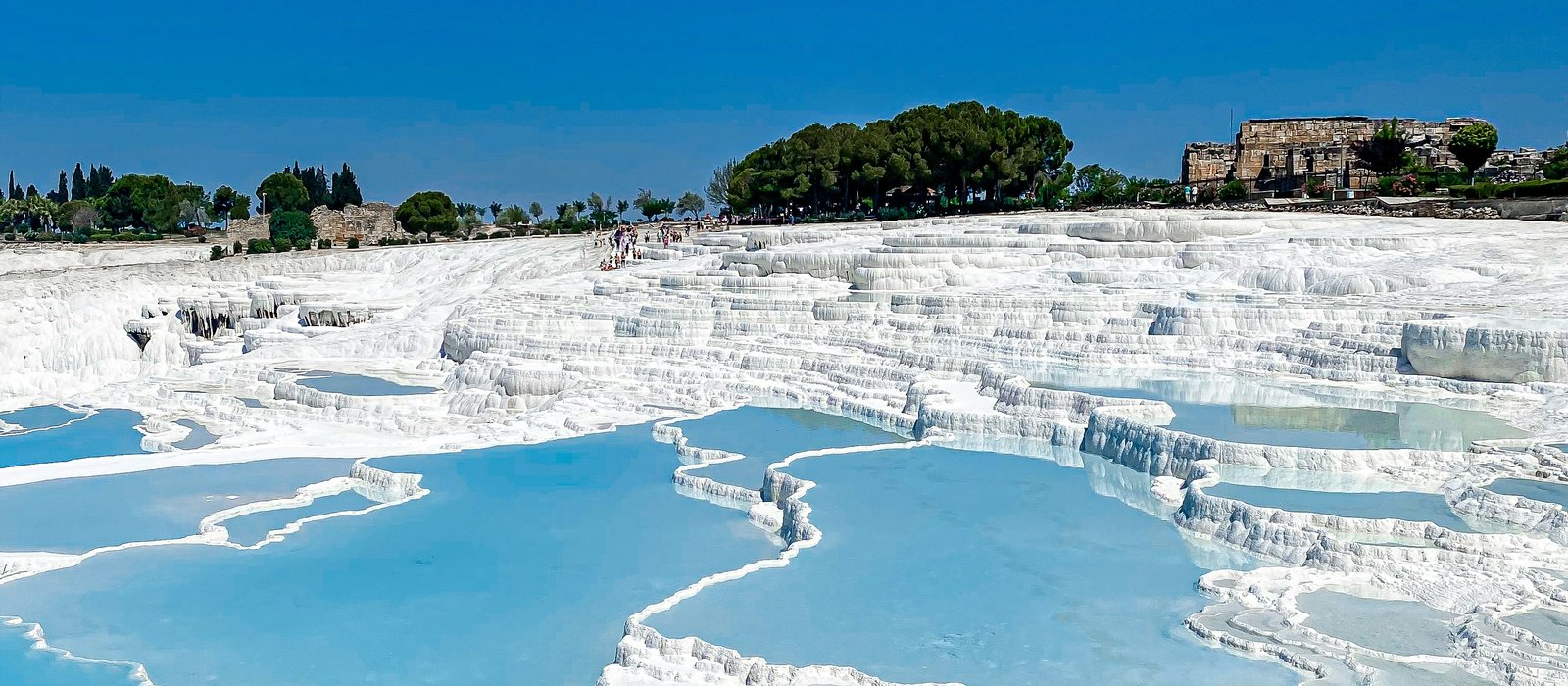
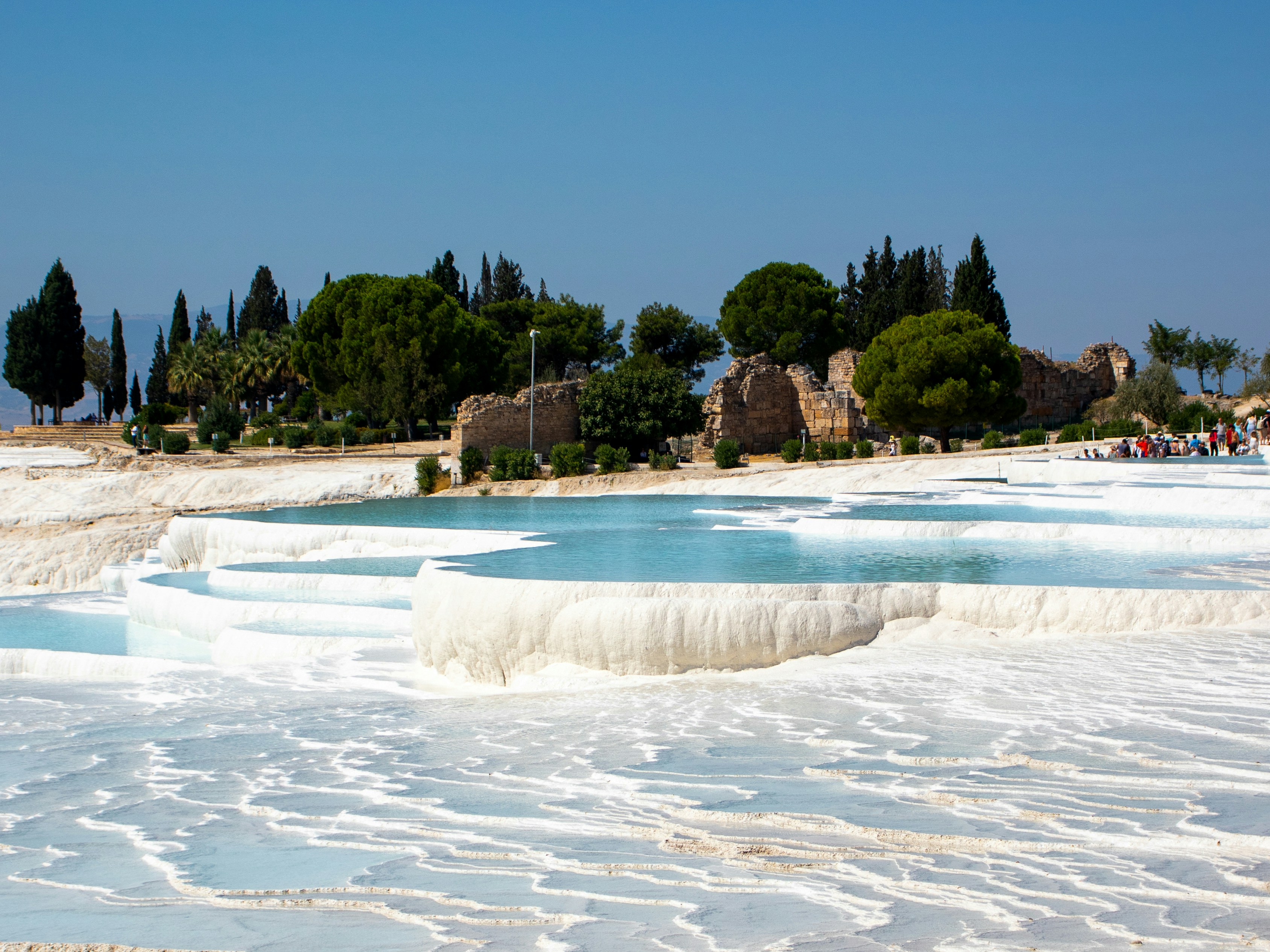
Pamukkale — "cotton castle" in Turkish — is one of Turkey's most surreal sights: a hillside of brilliant white travertine terraces, formed over millennia by mineral-rich thermal water cascading down in tiers of pale pools. Above them spread the ruins of the Greco-Roman spa city of Hierapolis. Together they're a UNESCO World Heritage Site and a bucket-list stop. Here's how to visit.
The travertine terraces
The terraces are the star. You walk barefoot across the chalky-white calcium surface (shoes aren't allowed, to protect it), wading through shallow warm pools as you climb. The effect — blinding white rock, turquoise water, and views over the valley — is unlike anywhere else. Go early or late for the best light and to beat the crowds and midday glare, and bring sunglasses; the white surface is dazzling.
Hierapolis and Cleopatra's pool
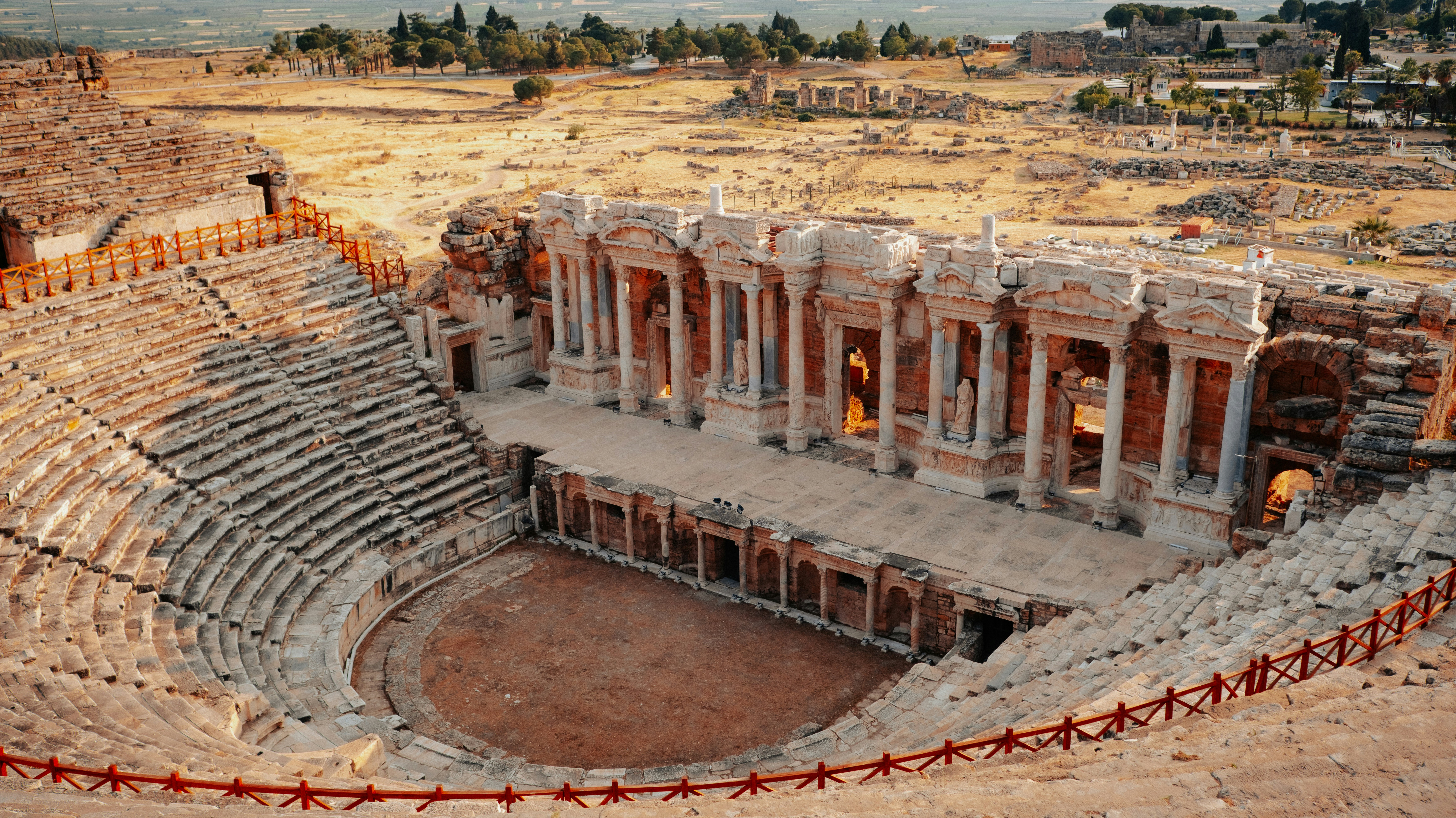
At the top sits Hierapolis, an extensive ancient spa city with a grand theater, colonnaded streets, and a vast necropolis. The standout extra is Cleopatra's Antique Pool, where for a separate fee you can swim in warm, mineral-rich thermal water among submerged ancient marble columns — a genuinely memorable dip. Allow time to explore the ruins as well as the terraces; the combined site is bigger than many expect.
Tickets and practicalities
One ticket covers both the travertines and Hierapolis; Cleopatra's pool costs extra. Prices move with the season and exchange rate, so check on arrival. Wear or bring a swimsuit if you want to swim, carry a towel, and remember footwear comes off for the terraces — a small bag for your shoes is handy. There's little shade, so sun protection and water are essential.
Getting there — day trip or overnight?
Pamukkale is inland, near the town of Denizli, which has its own airport (DNZ) with flights from Istanbul. Many travelers visit as a long day trip from the Aegean coast (Selcuk, Kusadasi, or Bodrum) or from Antalya, but the drive each way is several hours. Staying overnight in Pamukkale village lets you reach the terraces early or late, when day-trippers have gone and the light is best — the recommended approach if your schedule allows. See our Aegean coast guide for fitting it into a wider trip.
Combining Pamukkale with the rest of your trip
Because it sits inland between the Aegean coast and Antalya, Pamukkale fits naturally into a longer Turkey route. Travelers doing the Aegean often visit between Ephesus and the Mediterranean coast; those based in Antalya can reach it on a long day trip or overnight. If you're renting a car, it's an easy add-on; by bus, Denizli is the transfer hub with frequent minibuses up to Pamukkale village. Allow at least half a day on site — ideally split across a late afternoon and the following morning if you stay over — to see both the terraces and the substantial Hierapolis ruins without rushing.
Tips for the best experience
A few things elevate a Pamukkale visit. Time your terrace walk for early morning or the hour before sunset, when the low light turns the white surface gold and the day-trip buses are gone. Bring a swimsuit and towel whether or not you plan Cleopatra's pool — you may want to linger in the warm terrace pools. Watch your footing; the travertine can be slippery in places. And don't skip Hierapolis: its theater and necropolis are genuinely impressive and far less crowded than the terraces below.
Is Pamukkale worth it?
For most travelers, yes — there's genuinely nothing else like the cotton-white terraces, and pairing them with the substantial Hierapolis ruins makes for a rich half-day. The main caveat is the distance: it's a real detour from the coast, so it rewards those willing to give it the time, ideally with an overnight to catch the terraces at their quiet, golden best. Visit at the wrong hour — midday in peak summer, shoulder to shoulder with tour groups — and it can underwhelm. Plan it thoughtfully and it's one of Turkey's most memorable sights.
FAQ
What is Pamukkale?
A hillside of brilliant white travertine terraces formed by mineral-rich thermal water, topped by the ancient spa city of Hierapolis. It's a UNESCO World Heritage Site.
Can you swim at Pamukkale?
Yes — you can wade in the shallow travertine pools, and for a separate fee swim in Cleopatra's Antique Pool among submerged Roman columns.
Should I visit Pamukkale as a day trip or overnight?
It's a long day trip from the coast or Antalya. Staying overnight in Pamukkale village lets you reach the terraces early or late when crowds are thin and the light is best.
Do I have to take my shoes off at Pamukkale?
Yes — you walk barefoot on the travertines to protect the surface. Bring a small bag for your shoes and a towel if you plan to swim.
Keep planning
Not sure how it all fits together?
Pick your trip length and we'll point you to the right day-by-day itinerary.