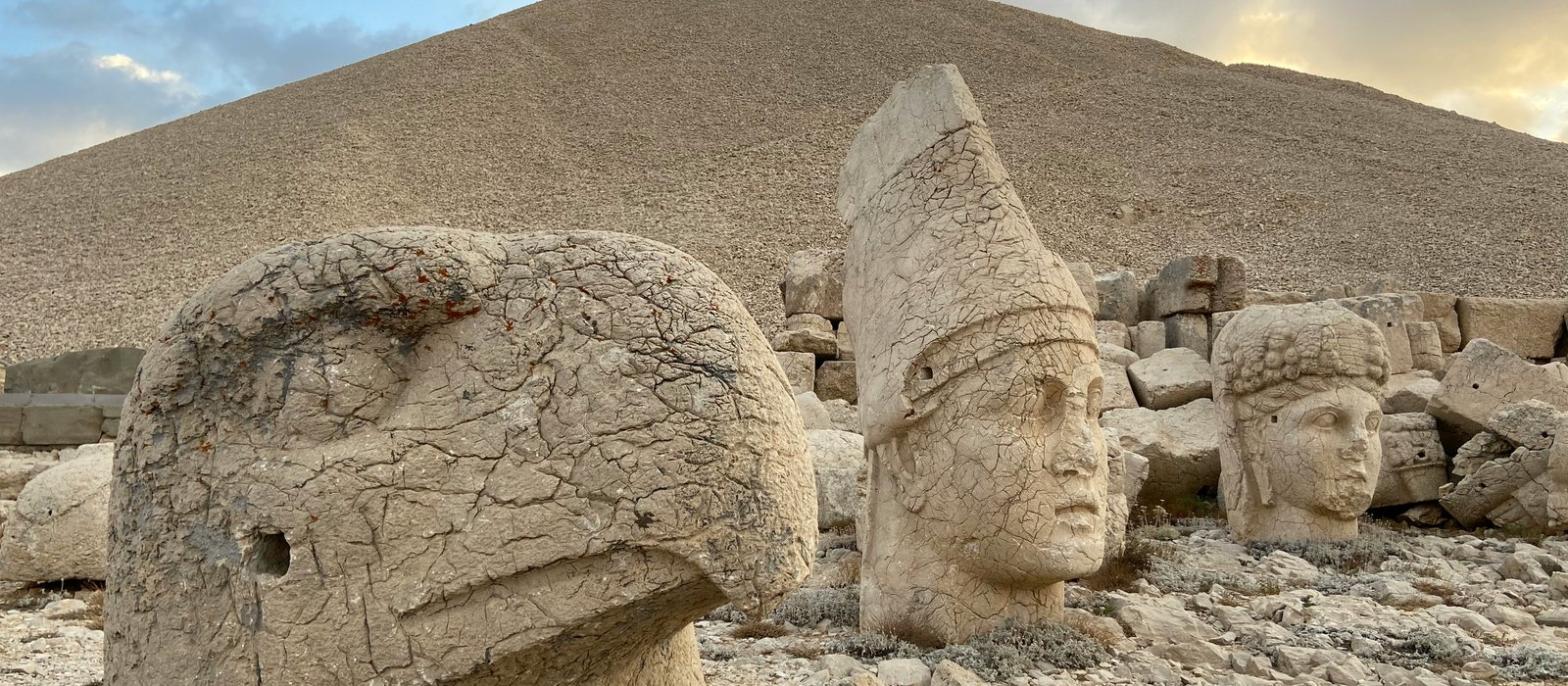
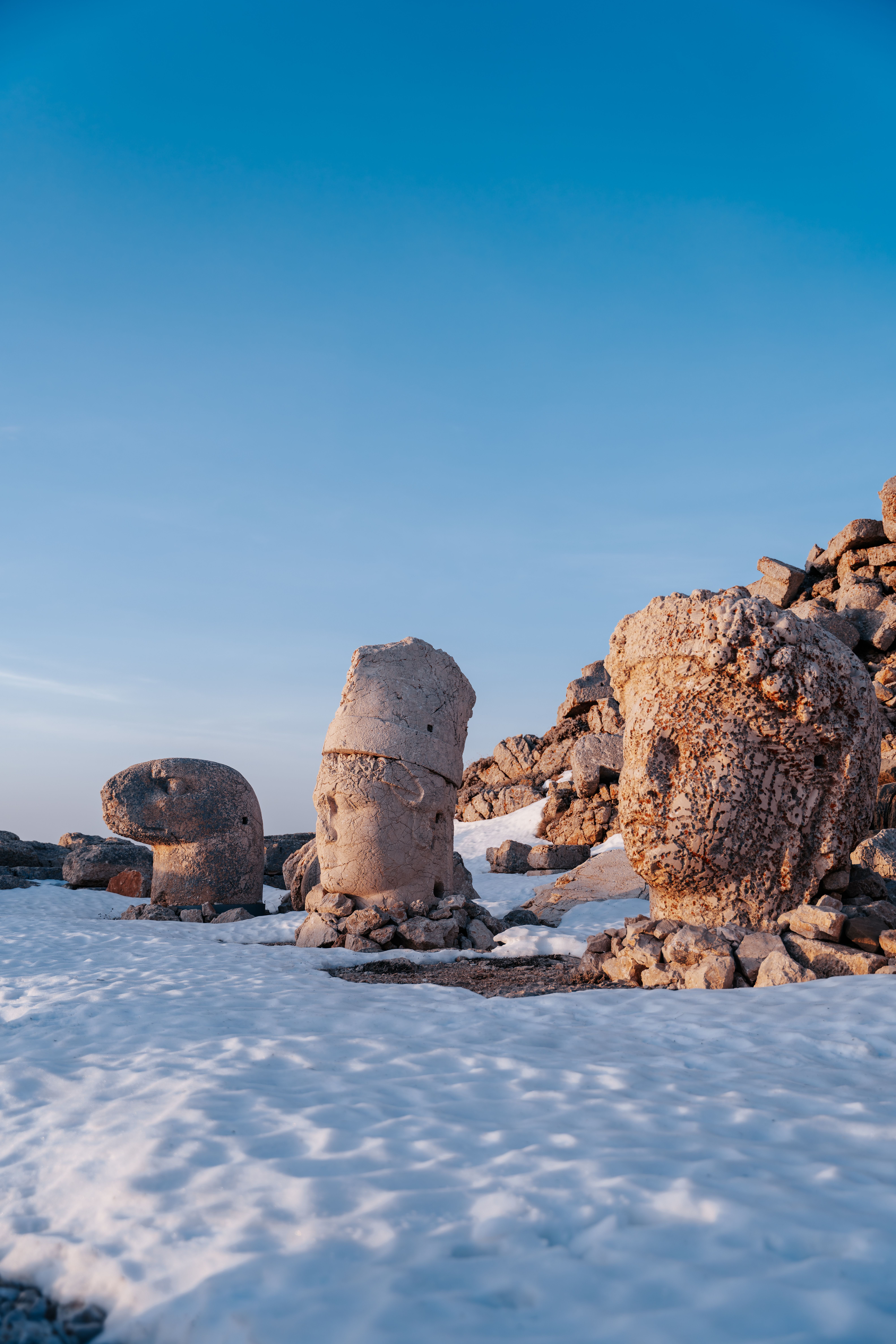
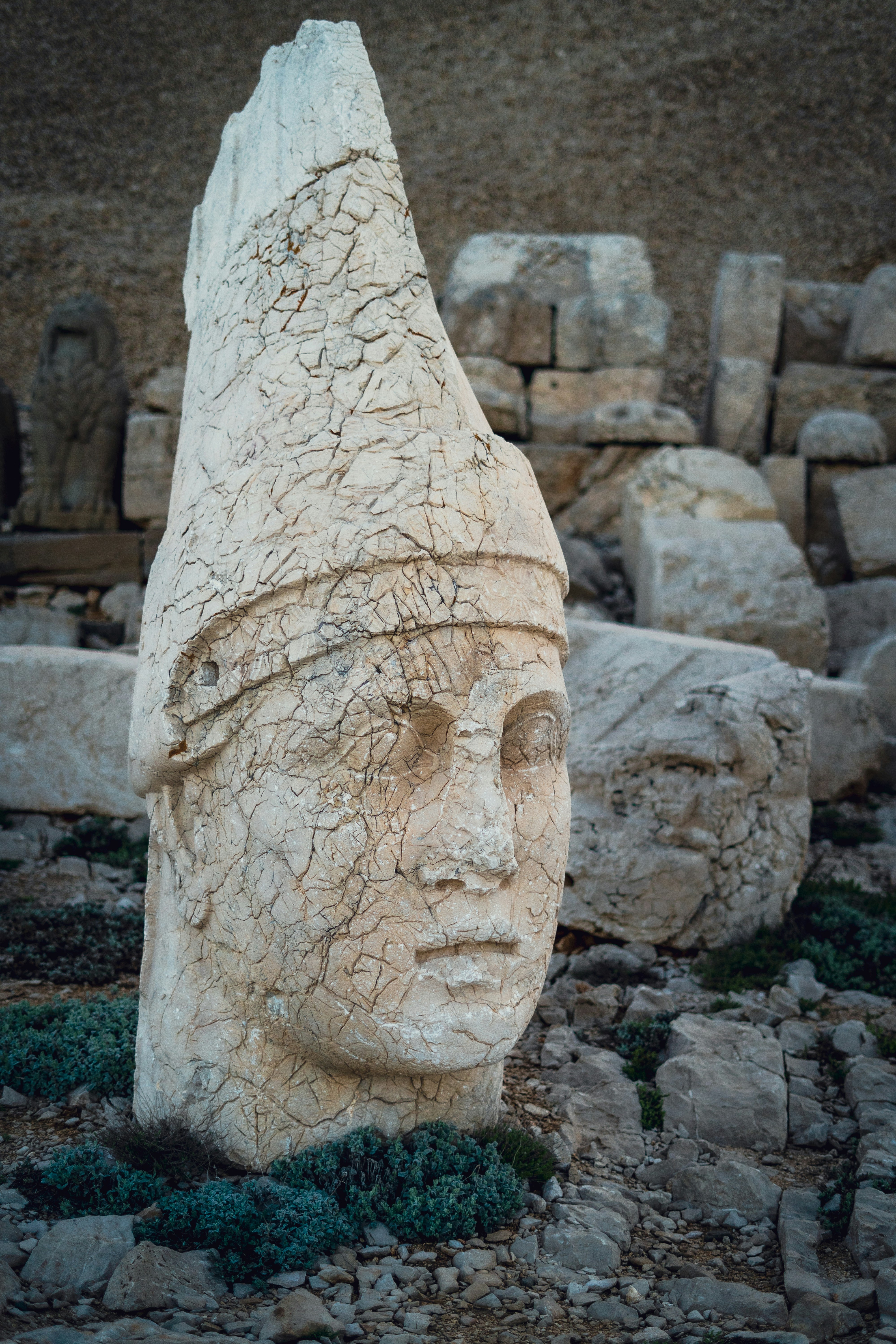
On a remote summit in southeastern Turkey sit some of the most haunting ruins in the country: the colossal stone heads of Mount Nemrut. Toppled from the bodies of giant seated statues by centuries of earthquakes, the heads of gods and kings now gaze out across the mountains, most dramatically at sunrise and sunset. It's a long way to come, but for many travelers it's an unforgettable highlight of Eastern Turkey. Here's how to do it.
What you're looking at
In the 1st century BC, King Antiochus I of the small kingdom of Commagene built himself a monumental tomb-sanctuary atop Mount Nemrut, more than 2,000 meters up. He erected enormous seated statues of himself alongside Greek and Persian gods, blending two worlds, on terraces around an artificial summit mound. Earthquakes eventually sheared the heads from the bodies, and today those weathered stone faces — several feet tall — sit at the feet of their thrones, staring across the range. It's a UNESCO World Heritage Site and one of the most atmospheric ancient places in Turkey.
Sunrise or sunset?
The classic experience is timing your visit to sunrise or sunset, when low light rakes across the heads and the surrounding peaks turn gold and pink. Sunrise is the most famous — and the coldest, requiring a pre-dawn start — while sunset is warmer and easier on the schedule. Either way, the summit is exposed and can be bitterly cold and windy even in summer, so bring layers, a hat, and gloves regardless of the season. From the parking area it's a moderate uphill walk of 20-30 minutes to the terraces.
What to expect at the summit
Set your expectations for a short but atmospheric visit rather than a sprawling site. From the parking area, a moderate uphill walk of 20-30 minutes on a stony path brings you to the terraces — east and west — where the giant heads sit at the feet of their throned bodies. There's a tumulus of crushed rock crowning the summit, believed to cover the still-undiscovered tomb. The whole visit takes an hour or two, and the magic is entirely about the light and the setting: the silhouettes of ancient gods against a vast mountain sunrise. Bring a flashlight or headlamp if you're going for sunrise in the dark, sturdy shoes for the path, and a camera — this is one of the most photographed scenes in Turkey for good reason.
How to get there
Mount Nemrut is genuinely remote. Most visitors base in the nearby towns of Kahta or Adıyaman, or sometimes Malatya to the north — all reachable by domestic flight from Istanbul (Adıyaman and Malatya have airports) plus a drive. From the base towns, it's a winding mountain road to the summit parking area, usually done by organized tour, private driver, or rental car. Because of the distances and the dawn timing, an overnight near the mountain is the practical way to catch sunrise. Many travelers fold Nemrut into a wider Eastern Turkey route alongside Şanlıurfa and Gaziantep.
When to go
The realistic season is late spring through early fall (roughly May to October); the summit road is often closed or impassable with snow in winter, and conditions up top are harsh. Even in midsummer, dress for cold at dawn. Spring and fall give the most comfortable conditions for the rest of the eastern route. As with all of Eastern Turkey, check your current travel advisory when planning, and confirm road and site access locally, since mountain conditions vary.
Is it worth the journey?
Be honest with yourself about the effort: Mount Nemrut is remote, the access involves a flight, a drive, and an early start, and the visit itself is short. For first-timers with a week focused on Istanbul, Cappadocia, and the coast, it's a stretch too far. But for travelers drawn to ancient history and dramatic landscapes — and especially those building a wider eastern route — the payoff is immense: standing among toppled stone gods as the sun breaks over the mountains is a genuinely once-in-a-lifetime scene, and you'll often share it with only a handful of others rather than the crowds at Turkey's western sites.
FAQ
What are the stone heads on Mount Nemrut?
They are the heads of giant 1st-century-BC statues of King Antiochus I and Greek-Persian gods, toppled by earthquakes from a royal tomb-sanctuary at the summit.
Should I visit at sunrise or sunset?
Both are spectacular. Sunrise is the classic, coldest option requiring a pre-dawn start; sunset is warmer and easier to schedule.
How do I get to Mount Nemrut?
Base in Kahta, Adıyaman, or Malatya — reachable by domestic flight plus a drive — then take a tour, private driver, or rental car up the mountain. An overnight nearby helps for sunrise.
When is Mount Nemrut open?
Roughly May to October. The summit road is usually closed or snowbound in winter. Dress for cold at the top even in summer.
Keep planning
Not sure how it all fits together?
Pick your trip length and we'll point you to the right day-by-day itinerary.